Will Your Battery Backup Start the Well Pump? Two Numbers Decide
A common 1 HP submersible well pump does not need a soft starter to run on battery backup: it needs a 240 V output and a surge rating of about 12,000 W, and the EG4 | 6000XP Off-Grid Inverter is the cheapest unit here that clears both. The rest of this build is about checking those two numbers against your own pump before you spend anything, because the answer changes with horsepower and with the kind of control box on the wall.
This matters most for people on a private well, where losing grid power also means losing water: no flushing and no washing up. It is also where a lot of money gets wasted. People buy a soft starter because they read that motors need one, or buy a box that runs the pump fine once it is spinning but cannot get it spinning in the first place. November is a good month to sort this out, before the first ice storm.
Why a pump is not an air conditioner
An air conditioner compressor starts against trapped refrigerant pressure, and a soft starter earns its keep there by stretching the start out and lowering the peak. A submersible pump motor is a different case. The motor makers' installation manuals treat a full-voltage start as normal for these motors, and they put the effort into sizing the power source instead.
Their generator guidance even says the opposite of the soft starter advice. A generator sized to the minimum for the motor already drops its voltage during the start, which acts as a soft start on its own. The manuals warn against adding a reduced-voltage starter to a minimum-sized generator, because both lower the voltage and together they can starve the motor and damage it. That warning is about generators. With a battery inverter the question is simply whether its surge covers the start.
Read the nameplate first
Everything below runs off the pump's nameplate, so find it before you shop. On a submersible the motor is down the well, but the same details are printed on the control box (if you have one), on the paperwork from the install, or on a tag at the wellhead. Write down:
- Horsepower (HP)
- Volts (most household well pumps are 230 V, which runs on a 240 V supply)
- Full load or service factor amps
- Locked rotor amps (LRA), or a KVA code letter, where printed
- 2-wire or 3-wire. A 2-wire pump has no control box on the wall, just a pressure switch. A 3-wire pump has a control box with the start capacitor in it.
If the nameplate shows no locked rotor figure, the motor makers' manuals publish one for each motor size, and the typical values are worked through below.
Gate one: 240 volts
A 230 V pump needs a 240 V supply, and no amount of surge on a 120 V unit changes that. This is where most portable gear drops out. Plenty of power stations and smaller inverter generators put out 120 V only, and they cannot run a 240 V pump at any size.
All six products in this build pass this gate. The four EG4 inverters are 48 V split-phase units with 120/240 V output, built to feed a home panel. The Champion generator and the Pecron power station both list 120/240 V output.
Gate two: the surge, and how long it lasts
When a motor starts it pulls its locked rotor amps for a moment, then settles to running amps as it comes up to speed. Multiply locked rotor amps by the nameplate voltage and you get the size of that moment in volt-amps (VA).
That figure is the cautious test, not a measured draw. VA is apparent power. At locked rotor a motor's power factor is low, so the real watts drawn are less than the VA figure. Comparing VA against an inverter's surge rating in watts errs toward a bigger inverter than you strictly need. That is the right way to err when the water supply depends on it, but it means a box that misses by a little may still start the pump. It does not mean the pump pulls that many watts.
The second half of the gate is the window. A surge rating is two numbers: the peak, and how long the inverter holds it. A short window is fine if the motor is up to speed before it ends. The spec sheets in this build give windows from half a second to ten minutes. The motor makers' figures for single-phase pumps give no start time, so for a unit with a short window, check owner reports for your pump size or ask the maker before you rely on it.
Worked example: a 1 HP pump
The motor makers' tables for a typical 4-inch, 1 HP, 230 V submersible give these figures:
- 3-wire: 41.8 locked rotor amps, so 41.8 x 230 is about 9.6 kVA
- 2-wire: 48.7 locked rotor amps, so 48.7 x 230 is about 11.2 kVA
- Running: about 1,210 W at full load and up to 1,600 W at maximum service factor
The 3-wire pump asks for less at start because its control box handles the start winding and capacitor. That is the cheaper case to back up. The 2-wire pump puts everything in the motor and pulls more.
Against the cautious test, the EG4 | 6000XP Off-Grid Inverter's 12,000 W surge covers both, with a window of 3.5 seconds. The EG4 | 18kPV Hybrid Inverter's 13,500 W covers both too. For bigger pumps the same tables give about 11.8 kVA for a 1.5 HP 3-wire pump with its capacitor box and about 15.2 kVA for a 1.5 HP 2-wire pump. The last one is past the 6000XP and the 18kPV by the cautious test, and that is where the higher peaks below come in.
The inverters and the backups
EG4 | 6000XP Off-Grid Inverter
This is the plain answer for the common pump. It puts out 6,000 W continuous at 120/240 V and surges to 12,000 W for 3.5 seconds, a window far longer than the start the sizing is guarding against. That clears every 1 HP pump in the motor makers' tables, 2-wire included, and a 1.5 HP 3-wire pump with its capacitor box. It is the least expensive inverter in this build. It is off-grid only, so it suits a well house, a cabin, or a dedicated backup panel rather than a whole-home grid-tied system. It also takes up to 8,000 W of solar across two MPPTs if you want the pump to keep running through a long outage.

EG4 | 6000XP Off-Grid Inverter
Price as of Nov 11, 2026. Prices and availability change; check the retailer for the current figure.
Check price at Signature Solar →Affiliate link. We may earn a commission.EG4 | 12kPV Hybrid Inverter
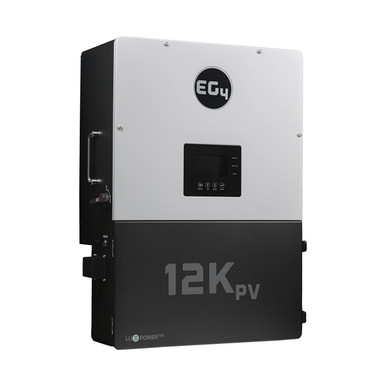
A step up in price, a grid-tied hybrid with 8,000 W continuous and a 16,000 W surge. That peak covers even the 1.5 HP 2-wire pump by the cautious test. The catch is the window: the spec sheet gives 16,000 W for 0.5 seconds. Whether a given pump is up to speed inside that is the open question, so treat this unit as covering bigger pumps on paper and check owner reports for your pump size before you count on it.
EG4 | 12kPV Hybrid Inverter
Price as of Nov 11, 2026. Prices and availability change; check the retailer for the current figure.
Check price at Signature Solar →Affiliate link. We may earn a commission.EG4 | 18kPV Hybrid Inverter
This one shows most clearly that the peak and the window are separate numbers. Its surge is 13,500 W, lower than the 12kPV's peak, but the spec sheet says it holds that for 600 seconds. No pump start comes close to that window. It also runs 12,000 W continuous, so the pump can start while a lot else in the house is running. It is the most expensive unit here and makes sense when the pump is one load among many on a whole-home system.

EG4 | 18kPV Hybrid Inverter
Price as of Nov 11, 2026. Prices and availability change; check the retailer for the current figure.
Check price at Signature Solar →Affiliate link. We may earn a commission.EG4 FlexBOSS18 13kW AC Hybrid Inverter
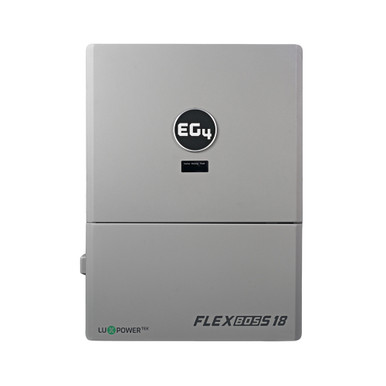
The biggest margin per start: a 20,000 W surge, against 13,000 W continuous with solar present and 10,000 W on battery alone. That peak clears everything in the motor makers' 1 HP and 1.5 HP tables by a wide margin under the cautious test. Like the 12kPV, the window is 0.5 seconds, so the same advice applies. It sits between the 12kPV and the 18kPV on price.
EG4 FlexBOSS18 13kW AC Hybrid Inverter
Price as of Nov 11, 2026. Prices and availability change; check the retailer for the current figure.
Check price at Signature Solar →Affiliate link. We may earn a commission.Champion 9000-Watt Electric Start Tri Fuel Home Backup Open Frame Inverter Generator
The generator path. It lists 120/240 V output and is rated at 9,000 W. Read the label for which figure is running and which is starting, and size against the running one. The motor makers size generators with their own minimum table rather than locked rotor amps: 6 kW for a 1 HP 2-wire pump, 4 kW for a 1 HP 3-wire pump and 7.5 kW for a 1.5 HP 2-wire pump. The generator also has to hold at least 65% of nameplate voltage while the motor starts. This is the one product where the reduced-voltage starter warning applies, so do not add one. Running on gasoline, propane or natural gas means fuel, not battery, sets how long you have water.
Champion 9000-Watt Electric Start Tri Fuel Home Backup Open Frame Inverter Generator
Price as of Sep 20, 2026. Prices and availability change; check the retailer for the current figure.
Check price at Amazon →Affiliate link. We may earn a commission.Pecron F5000LFP Portable Power Station, 5120Wh
The power-station path. It puts out 7,200 W at 120/240 V and holds 5,120 Wh, expandable to 35.8 kWh. Its surge rating is not published in the specs this catalogue holds, and that is the number that decides whether it starts your pump. Owners report a pair of linked 3,600 W power stations at 240 V starting a 1.5 HP deep-well pump, though that pump had a start aid fitted. That is encouraging, but it is not a figure for this box. Ask the maker for the surge and its duration before you rely on it for a well.
Pecron F5000LFP Portable Power Station, 5120Wh
Price as of Sep 30, 2026. Prices and availability change; check the retailer for the current figure.
Check price at Amazon →Affiliate link. We may earn a commission.Running the pump once it starts
Starting is the hard part. Running is easy by comparison: a 1 HP pump draws roughly 1,200 to 1,600 W. What catches people out is what else is on when the pressure switch closes. A fridge compressor, a furnace blower and a microwave starting at the same moment all stack on top of the pump's start. Size the continuous rating for the pump's running load plus the other essentials, and keep the surge margin for the pump.
How long the pump runs depends on how much water you use, not just the pump size. A pump that runs a few minutes per tank refill uses little energy over a day. A household watering a garden or filling a stock tank uses far more.
Wiring and safety
Any backup that feeds house wiring needs a transfer switch or a listed interlock on the panel, so it cannot back-feed the utility line. The pump belongs on its own 240 V two-pole breaker, as it most likely already is. Connecting an inverter or generator inlet to the panel, adding a subpanel, or moving the pump circuit is work for a licensed electrician, and it usually needs a permit. Do not open the well's control box or pressure switch with power on, and leave anything down the well to a pump contractor.
Parts list
Inverter, pick one:
- EG4 | 6000XP Off-Grid Inverter: the off-grid inverter that clears a 1 HP pump with a long surge window
- EG4 | 12kPV Hybrid Inverter: grid-tied hybrid with a high, short surge for bigger pumps
- EG4 | 18kPV Hybrid Inverter: whole-home hybrid that holds its surge for minutes
- EG4 FlexBOSS18 13kW AC Hybrid Inverter: the largest peak, for big pumps and busy panels
Without a battery inverter:
- Champion 9000-Watt Electric Start Tri Fuel Home Backup Open Frame Inverter Generator: fuel-driven 240 V backup, sized by the motor makers' generator table
- Pecron F5000LFP Portable Power Station, 5120Wh: sealed 240 V box, once the maker confirms its surge
Also needed: a 48 V battery bank for any of the inverters, a transfer switch or panel interlock, and an electrician.
Who this is for, and who should skip it
This is for anyone on a private well with a 230 V submersible pump who wants water during an outage and is choosing between an inverter, a generator and a power station. It is especially for anyone who was about to buy a soft starter for the pump.
Skip it if your pump is a 115 V model, since a 120 V system covers it and the 240 V gate does not apply. Skip it too if your well is on a large three-phase pump or a constant-pressure variable-speed drive, which has its own start behaviour and its own rules from the drive maker. And if you already have a whole-home backup that starts the pump, there is nothing to fix.
Bottom line
The EG4 | 6000XP Off-Grid Inverter is the pick: it is the least expensive way to get 240 V and a 12,000 W surge held for 3.5 seconds, which starts the common 1 HP well pump with margin and no soft starter.
EG4 | 6000XP Off-Grid Inverter
Price as of Nov 11, 2026. Prices and availability change; check the retailer for the current figure.
Check price at Signature Solar →Affiliate link. We may earn a commission.FAQ
Does a well pump need a soft starter to run on an inverter?
Usually not. A common 1 HP submersible pump starts on a 240 V inverter whose surge rating covers its locked rotor amps times the voltage, held long enough for the motor to come up to speed.
How big an inverter do I need to start a 1 HP well pump?
By the cautious test, about 9.6 kVA for a 3-wire pump and 11.2 kVA for a 2-wire pump at 230 V, so a 240 V inverter with a surge of about 12,000 W covers both.
Can a 120 V power station run a 230 V well pump?
No. A 230 V pump needs a 240 V supply. Check that the inverter, generator or power station lists 120/240 V or 240 V output before looking at its surge rating.
Why does a 2-wire well pump need a bigger backup than a 3-wire pump?
A 3-wire pump keeps its start capacitor in a control box, so it pulls fewer locked rotor amps at start. A 2-wire pump has everything in the motor and pulls more.
Should I add a soft starter to a generator for my well pump?
The motor makers' manuals warn against a reduced-voltage starter on a minimum-sized generator, because both drop the voltage and together they can damage the motor.